MQT Core
MQT Core provides reusable C++20 and Python libraries for quantum computing: the MQT Compiler Collection, built on MLIR and LLVM, together with decision diagrams, QIR execution, QDMI device access, SDK and HPC integrations, and structured benchmarks. It forms the backbone of the Munich Quantum Toolkit (MQT).
MQT Core 4 is a major architectural release. Structured compiler representations replace the classic circuit APIs and connect quantum-classical programs to optimization, hardware mapping, and execution. For the release highlights, see the v4 overview. Existing users should start with the v3-to-v4 migration guide.
Start with your task
Install the Python package or follow the source-build instructions. Then choose a starting point:
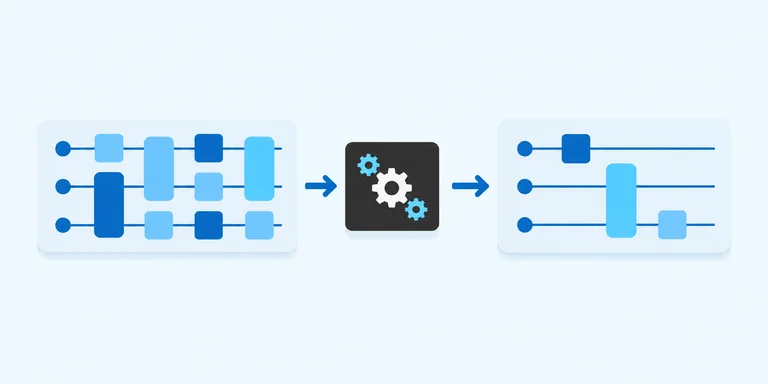
Factor 21 with Shor’s algorithm and measurement feedback.
First example: Shor factoring walkthrough
Tutorials: Understand quantum compilation
Guide: Compilation and execution
API:
mqt.core.mlir

Discover QDMI devices, integrate SDKs, and implement device interfaces.
First example: Discover and use a device
API:
mqt.core.qdmiand C++

Represent and manipulate quantum states and operations in C++ or Python.
First example: DD quickstart
Guide: Decision diagrams
API:
mqt.core.ddand C++

Configure structured programs and evaluate results against their references.
First example: Configure a benchmark
Guide: Structured benchmarks
API:
mqt.core.bench

Move between Qiskit, OpenQASM, jeff, and QIR text or bitcode.
First example: Qiskit to QIR
Guides: QIR, OpenQASM, and Qiskit, plus jeff exchange
API:
compile_program()

Use the C++ libraries or work on the MLIR compiler infrastructure.
First example: Native runtime quickstart
Guide: C++ compilation and compiler development
API: C++ reference and MLIR dialects and passes
Source code is available on GitHub. For installation options, platform requirements, and development setup, see Installation.
Contributors and Supporters
MQT Core is developed by MQSC and the Chair for Design Automation at the Technical University of Munich. Among others, it is part of the Munich Quantum Software Stack (MQSS) ecosystem, which is being developed as part of the Munich Quantum Valley (MQV) initiative.


Thank you to all the contributors who have helped make MQT Core a reality!
The MQT will remain free, open-source, and permissively licensed — now and in the future. We are firmly committed to keeping it open and actively maintained for the quantum computing community.
To support this endeavor, please consider:
Starring and sharing our repositories: https://github.com/munich-quantum-toolkit
Contributing code, documentation, tests, or examples via issues and pull requests
Citing the MQT in your publications (see References)
Using the MQT in research and teaching, and sharing feedback and use cases
Sponsoring us on GitHub: https://github.com/sponsors/munich-quantum-toolkit